How Many Gallons Per Flush Is Your Aliso Viejo Toilet? Reading the Label, the Code and the Clues
Aliso Viejo homes built in the late 1980s and 1990s often still have original toilets next to newer 1.28 gpf models. How to find the gallons-per-flush rating, what…
Many Aliso Viejo homes were built during the master-planned boom of the late 1980s and 1990s, and plenty of them still have at least one original toilet. Neighborhoods like Pacific Park, Glenwood and the condo and townhome communities near Wood Canyon often mix a newer high-efficiency toilet in the primary bath with an older tank in a guest bath. Knowing the gallons per flush (gpf) of each one helps you understand your water use and decide whether a fixture update is worth it.
Where to find the gpf rating
Most toilets made since the 1990s have the rating stamped or printed in one of three places:
- Behind the seat hinge on the bowl, near the back edge.
- Inside the tank, on the back wall, molded into the china above the water line.
- On a sticker or stamp under the tank lid.
Look for a number such as 1.28 gpf, 1.6 gpf or 3.5 gpf, often with a date code. If you find no marking at all, the toilet may predate the federal 1.6 gpf standard that took effect for most residential toilets in the mid-1990s.
What California expects today
California set a 1.28 gpf maximum for most new toilets sold in the state starting in 2014. Federal law still allows 1.6 gpf elsewhere, so a toilet bought out of state or salvaged from another project may not match current California sales rules. WaterSense-labeled toilets are also rated at 1.28 gpf or less and must pass a flush-performance test.
Clues that an old toilet is using more than its label
Even a correctly rated toilet can use more water if the parts inside are worn:
- The fill valve runs for a few seconds every so often with no one using it (a slow flapper leak).
- The water level sits above the overflow tube mark.
- You hear a faint hiss at night.
- You hold the handle down to get a complete flush, which adds water every time.
A few drops of food coloring in the tank, with no flushing for 15 minutes, will show whether water is seeping into the bowl.
How toilets relate to the rest of your plumbing
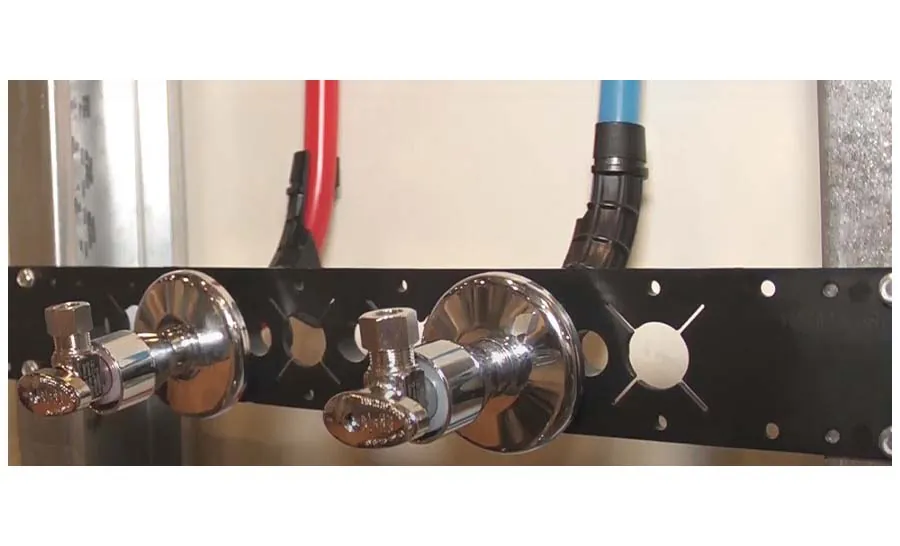
A toilet only uses the water it is given. The supply line and angle stop behind it, and the pipes feeding that bathroom, decide how quickly the tank refills. In older Aliso Viejo homes, a slow refill after a fixture update can point to a corroded stop valve or a narrowed branch line rather than the new toilet. If a new 1.28 gpf toilet clogs often, the issue is usually bowl design or the drain line, not the water supply.
HOA and condo considerations
Many Aliso Viejo townhome and condo associations have rules about contractor access, work hours and shared walls. If a fixture change will involve opening a wall or shutting off water to more than one unit, check with the association before scheduling anything.
Quick takeaways
- Find the gpf mark before assuming a toilet is old or new.
- A 1.28 gpf label means current California efficiency.
- Leaks inside the tank waste far more water over a month than the rated flush volume.
- Slow refills point upstream of the toilet, to the stop valve or branch piping.
Related reading
On this site, see main water shutoff valve and shower temperature changes when the toilet flushes. Neighbors can visit Laguna Niguel, Laguna Hills and Mission Viejo, or browse every city at repipeinc.com.
Questions about the pipes behind your fixtures?
Request a free quote to have a licensed C-36 contractor look at the piping in your Aliso Viejo home. Get my free quote. Our AI system alerts a technician instantly, so you get a fast callback.
Repipe OC, 23821 Hillhurst Drive, Laguna Niguel, CA 92677, (949) 524-2362, CSLB #1087885 C-36.
Repipe OC near you
Not in Aliso Viejo? The same crew serves nearby cities. See every city we serve, or jump to a neighboring city:
 Written by Repipe OC · CSLB #1087885 C-36 · 23821 Hillhurst Drive, Laguna Niguel, CA 92677 · (949) 524-2362